
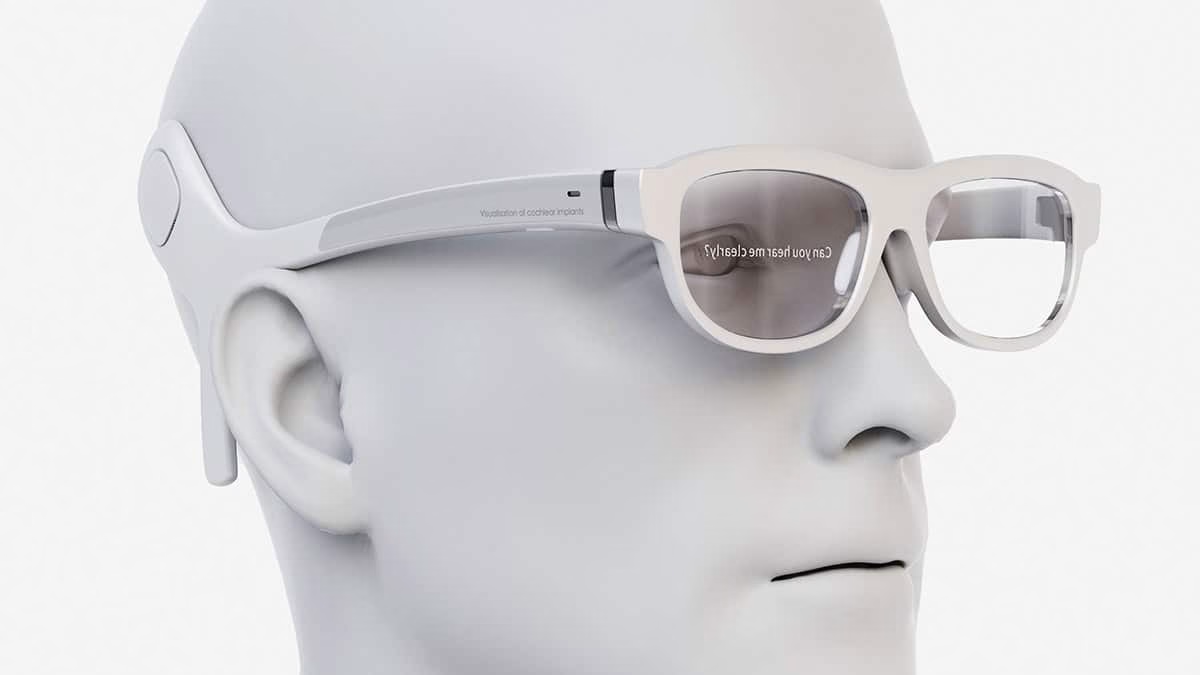
Featured in the Red Dot Award for Design Concept, the cochlear implant glasses by Califor Design Co., Ltd merge visual transcription with audio output to transform communication for users with profound hearing loss. Their discreet aesthetics and foldable design make them both functional and wearable on a daily basis.
This device integrates a cochlear implant with real-time transcription projected onto the lenses. When speech is detected, users receive synchronized audio through the implant and see the conversation displayed on their lenses. This dual-sensory interface enhances clarity and fluidity in communication.
Unlike conventional solutions, this system leverages both audio and visual cues to improve speech comprehension. By combining in-lens transcription with internal sound transmission, it creates a seamless and immersive communication experience without perceptible delay. This cross-sensory design is central to its innovation.
The product is designed to look and feel like regular glasses, with foldable frames, hidden sound input ports, and built-in magnets for a secure fit. This discreet form factor allows users to wear them comfortably without drawing attention, reducing stigma while ensuring technical efficiency.
Developed by Califor Design Co., Ltd in China and led by Liang Liu, the project reflects the studio’s focus on user-centric, socially impactful design. Their broader work often explores how medical and accessibility tools can blend seamlessly into everyday life.
The concept won a Red Dot Award for Design Concept in the Medical Devices and Technology category. This prestigious recognition highlights its functional relevance and aesthetic integration in a field where technical innovation often lacks user-friendly execution.
Because it signals a paradigm shift in assistive medical design—where inclusive sensory technology, subtle aesthetics, and real-time communication come together in a single wearable product. Its global recognition suggests changing expectations around hearing accessibility.
Further reading :

Online as in a shop window, the image comes before the words: it is what the customer studies, what reassures them or cheapens a frame chosen with care. Yet eyewear is one of the hardest objects to photograph — lens and material bounce light in different ways. This is the practical guide to eyewear photography […]
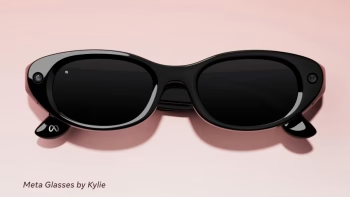
On June 23, 2026, Meta and EssilorLuxottica unveiled Meta Glasses, a new line of smart eyewear. After Ray-Ban Meta and Oakley Meta, it is the first time the wearable carries Meta’s own name — a sign that connected eyewear is establishing itself as a standalone optical category rather than a piece of technology grafted onto […]

Linda Farrow doesn’t do nostalgia. With the Iconic Collection, the British house revisits its founding vocabulary — the forms that defined it in 1970 — and reengineers them for a generation that never saw the originals. This is not a reissue. It is a restatement. A Return to Origins That Refuses to Romanticise Founded in […]