

Smart Glasses 2026: Innovation, Use Cases and Emerging Trends

Smart Glasses 2026: Innovation, Use Cases and Emerging Trends

2026 marks a turning point for smart glasses. Everyday use is becoming ordinary — display technology, embedded AI, integrated prescription lenses — even as the industry behind them faces its first real crisis of confidence: EssilorLuxottica, the category’s leader, has seen its share price fall more than 40% despite record sales, while Meta launches its own standalone AI eyewear brand and Google, Samsung and Kering Eyewear sharpen a competition that was, until recently, marginal.

This guide covers what has genuinely changed this year: the technical innovations, the industrial and financial tension running through the sector, the new entrants, and how to navigate a market that has suddenly become far more contested.

Smart Glasses 2026: A Category Changing Scale

From accessory to interface: on-device display takes a leap forward

Unveiled at CES 2026, the Meta Ray-Ban Display glasses capture this shift: a built-in teleprompter projects notes or scripts directly into the wearer's field of view, while the Meta Neural Band enables handwriting in thin air through wrist-based EMG sensors, converting gestures into Messenger or WhatsApp messages. Pedestrian navigation has expanded to 32 cities, and a concept developed with Garmin explores controlling a car's cabin interface with a simple wrist gesture. A collaboration with the University of Utah is also exploring accessibility applications for people living with muscular dystrophy, stroke or ALS — a sign that gesture-based interfaces are moving well beyond consumer novelty. This particular model has not yet been published in English on Parisee; the link below leads to our French coverage.
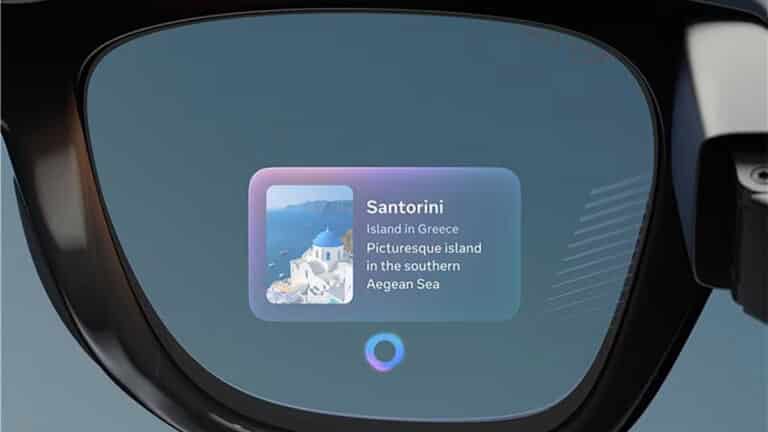
Meta Ray-Ban Display smart glasses with built-in teleprompter and handwriting via Neural Band

Discover the Meta Ray-Ban Display CES 2026 updates (FR article) →

Prescription compatibility: the last barrier falls

With Blayzer and Scriber, the Ray-Ban Meta Optics Gen 2 build in prescription compatibility from the ground up — a structural shift rather than a cosmetic one. AI glasses are no longer a piece of technology worn in addition to prescription eyewear; they replace it. Meta extends the same logic to Oakley, with new frame-and-lens combinations across the Vanguard and HSTN lines. The long-promised convergence between corrective optics and wearable tech has become a concrete selling point.
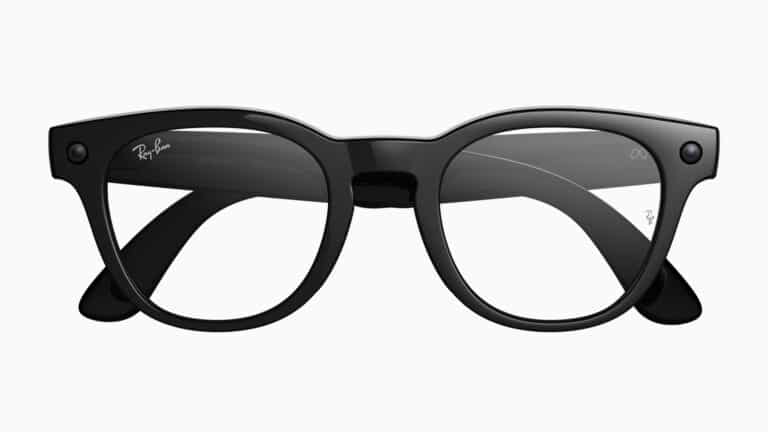
Ray-Ban Meta Optics Gen 2: AI glasses compatible with prescription lenses

Discover Ray-Ban Meta Optics Gen 2 →

Toward European-built components

By partnering with Italian foundation Chips-IT under a 2026–2028 strategic programme, EssilorLuxottica is looking to secure custom chip design — miniaturisation, power efficiency, sensors — through open hardware rather than relying on third-party suppliers. It's a direct answer to a question 2026 has made unavoidable: who controls the technology stack behind connected eyewear, and at what cost?

Discover the EssilorLuxottica x Chips-IT alliance →

EssilorLuxottica: Record Sales, a Share Price Under Pressure

This is the story that has defined the category in 2026. EssilorLuxottica posted 10.8% constant-currency growth in the first quarter — a figure most companies would envy — yet its share price has fallen more than 40% since its November 2025 peak, wiping out roughly €65 billion in market value. The market isn't punishing sales; it's punishing margin. Ray-Ban Meta connected eyewear, the engine behind that growth, proves less profitable than traditional optical frames, and replacing precise 2026 financial targets with a vaguer five-year outlook has further eroded investor confidence — a shift the market read as an admission rather than a simplification.

EssilorLuxottica stock chart showing the 2026 share price crash from its November 2025 peak

Two announcements in June 2026 offer early signs of an industrial response: the opening of a wearable production line at the historic Agordo plant in Italy (operational from early 2027), and a joint development agreement with Applied Materials to accelerate next-generation augmented-reality optics platforms — waveguides, adaptive lenses. Neither closes the case, but both signal that smart glasses could become a margin driver rather than just a revenue one.

Read the full stock market crash analysis →

Meta Glasses: AI Eyewear Becomes a Brand of Its Own

On June 23, 2026, Meta and EssilorLuxottica marked a symbolic milestone by launching Meta Glasses — a line that no longer borrows a heritage name like Ray-Ban or Oakley, but carries Meta's own. Three models (Meta Adventurer, Meta Fury, Meta Glasses by Kylie), 26 style combinations, all prescription-compatible, and on-device intelligence powered by Muse Spark, the first model out of Meta Superintelligence Labs. Priced from $299 and sold via Meta.com, Best Buy, Amazon, LensCrafters and Sunglasses Hut, the brand is aiming squarely at mass adoption — and embodies the sector's central tension all on its own: democratising AI eyewear while easing investor concerns about its profitability.
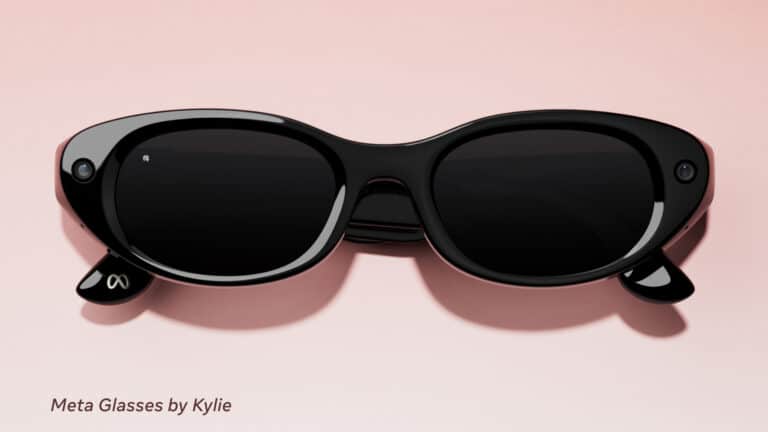
Meta Glasses, the new standalone AI eyewear brand from Meta and EssilorLuxottica

Discover Meta Glasses in detail →

A Competitive Landscape That Keeps Intensifying

Google, Gentle Monster and Warby Parker: an orchestrated comeback

More than a decade after the failure of Google Glass, Google is back with an ecosystem strategy rather than a standalone gadget: a $100 million investment in Gentle Monster (4% of the company, valuing it at $2.5 billion), up to $150 million committed to Warby Parker, all powered by Gemini AI under Android XR.

Further reading :

Eyewear Photography for E-commerce, POS and Campaigns: The Brand’s Guide

Online as in a shop window, the image comes before the words: it is what the customer studies, what reassures them or cheapens a frame chosen with care. Yet eyewear is one of the hardest objects to photograph — lens and material bounce light in different ways. This is the practical guide to eyewear photography […]

Meta Glasses: EssilorLuxottica and Meta launch a standalone AI eyewear brand

On June 23, 2026, Meta and EssilorLuxottica unveiled Meta Glasses, a new line of smart eyewear. After Ray-Ban Meta and Oakley Meta, it is the first time the wearable carries Meta’s own name — a sign that connected eyewear is establishing itself as a standalone optical category rather than a piece of technology grafted onto […]

Linda Farrow Iconic Collection: 1970 Heritage, Engineered for Today

Linda Farrow doesn’t do nostalgia. With the Iconic Collection, the British house revisits its founding vocabulary — the forms that defined it in 1970 — and reengineers them for a generation that never saw the originals. This is not a reissue. It is a restatement. A Return to Origins That Refuses to Romanticise Founded in […]

EssilorLuxottica 2026: The Stock Market Crash of a Company with Record Sales, Explained

There is something almost paradoxical about EssilorLuxottica’s stock market trajectory in 2026. The group continues to post sales figures most companies would envy — +11.7% at constant exchange rates in Q3 2025, +11.2% for the full year, and +10.8% again in Q1 2026. Yet over six months, its share price has erased more than 40% […]

Paloceras Nouvelle Fiction Sun: The Pebble Series Goes Solar

What Paloceras built with the Pebble series, then translated into prescription eyewear with Nouvelle Fiction optical, now reaches its third chapter: a sunglasses collection that preserves the house’s sculptural grammar while turning it toward the light. Nouvelle Fiction Sun is not a spin-off. It is a continuation — on its own terms. From Optical to […]

Oakley Jackets 2026: When Performance Becomes Aesthetic

Thirty years after their debut, Oakley Jackets are no longer just evolving. They are redefining what sports eyewear can be — and what it represents. In 1994, Oakley introduced a frame that didn’t exist before. Wraparound, bold, engineered not to please but to perform. In 2026, that same mindset expands into a broader vision: a […]

FAQ — Smart Glasses 2026

Why did EssilorLuxottica’s share price fall despite record sales?

The market isn’t punishing sales — it’s punishing margin. Ray-Ban Meta connected eyewear is less profitable than traditional optical frames, and replacing precise financial targets with a vaguer five-year outlook has eroded investor confidence.

What is Meta Glasses, Meta’s new eyewear brand?

Launched on June 23, 2026 with EssilorLuxottica, Meta Glasses is the first AI eyewear line to carry Meta’s own name: three models, 26 styles, all prescription-compatible, from $299.

Who is now competing with Ray-Ban Meta in smart glasses?

Google (with Gentle Monster and Warby Parker), Samsung (Galaxy XR), Kering Eyewear (partnered with Google on Android XR), and quieter players like Even, which bets on a minimalist, camera-free, microphone-free approach.

Are smart glasses now compatible with prescription lenses?

Yes. Ray-Ban Meta Optics Gen 2 and Meta Glasses build in prescription support natively — a shift that turns AI eyewear into a genuine alternative to regular prescription glasses, rather than an accessory worn on top of them.

How should you choose smart glasses in 2026?

Start by defining the primary use (communication, sport, professional assistance), then check compatibility with your prescription, comfort, battery life and the manufacturer’s privacy policy.

Do smart glasses protect user privacy?

It varies by model. Manufacturers are improving transparency around camera and microphone use, but caution is still warranted — some models, like the Even G2, make the absence of a camera their central selling point.

The Parisee Edit

The frames that define the look. The collections, styles, and brands worth your attention.

No spam. Just the essentials. Unsubscribe anytime.