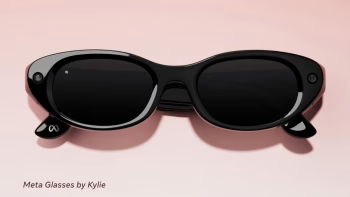
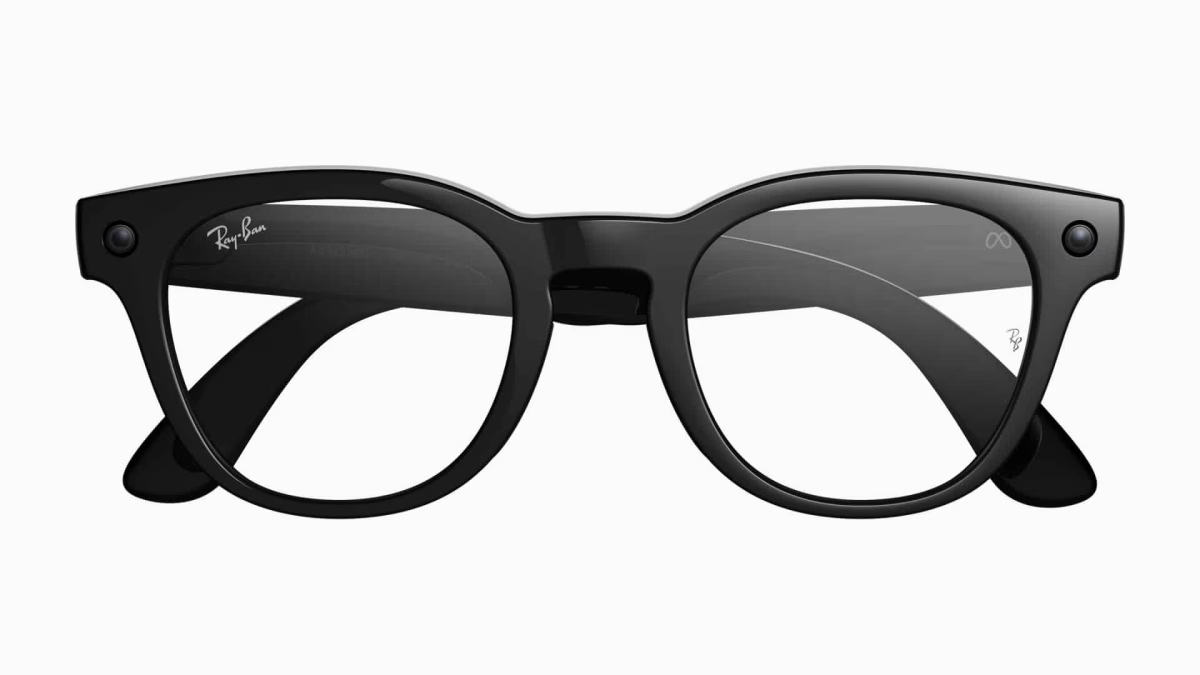
Meta expands its smart glasses vision by integrating prescription compatibility into its latest designs. With Blayzer and Scriber, the Ray-Ban Meta Optics Gen 2 move closer to everyday eyewear, while new Oakley Meta variations signal a broader shift toward wearable, vision-first interfaces.
Why do Ray-Ban Meta Optics Gen 2 mark a turning point for smart glasses?
By embedding prescription support directly into the product design, Meta removes one of the biggest barriers to adoption. Smart glasses are no longer a secondary device—they become a primary pair of eyewear. This shift redefines their role, moving from occasional tech accessory to continuous, everyday object.
Blayzer and Scriber: what actually changes with these new models?
Blayzer Optics (Gen 2) and Scriber Optics (Gen 2) are built from the ground up to accommodate prescription lenses. This design approach ensures better alignment between optical performance, comfort, and embedded technology, avoiding the compromises seen in earlier iterations.
How is Meta expanding its ecosystem with Oakley?
Beyond Ray-Ban, Meta is introducing new frame color and lens combinations for Oakley Meta Vanguard and HSTN. This expansion brings a more performance-driven and lifestyle-oriented dimension to smart eyewear, reinforcing the partnership with EssilorLuxottica and positioning the category across multiple use cases.
What does the everyday user experience look like?
The experience is designed around seamless assistance: voice interaction, contextual information, and first-person capture. Rather than being activated occasionally, the glasses operate as a continuous layer, blending into daily routines and interactions.
Why does prescription compatibility accelerate adoption?
Prescription integration eliminates the need to switch between traditional eyewear and smart glasses. By merging both functions into a single object, Meta enables a more natural adoption curve, rooted in an already essential habit: wearing glasses.
Are smart glasses becoming the next interface?
The use cases demonstrated around Meta glasses suggest a shift toward contextual visual interfaces: messages appearing in view, suggested replies, calendar reminders, or immersive first-person capture. Information becomes immediate, spatial, and embedded within the user’s field of vision.
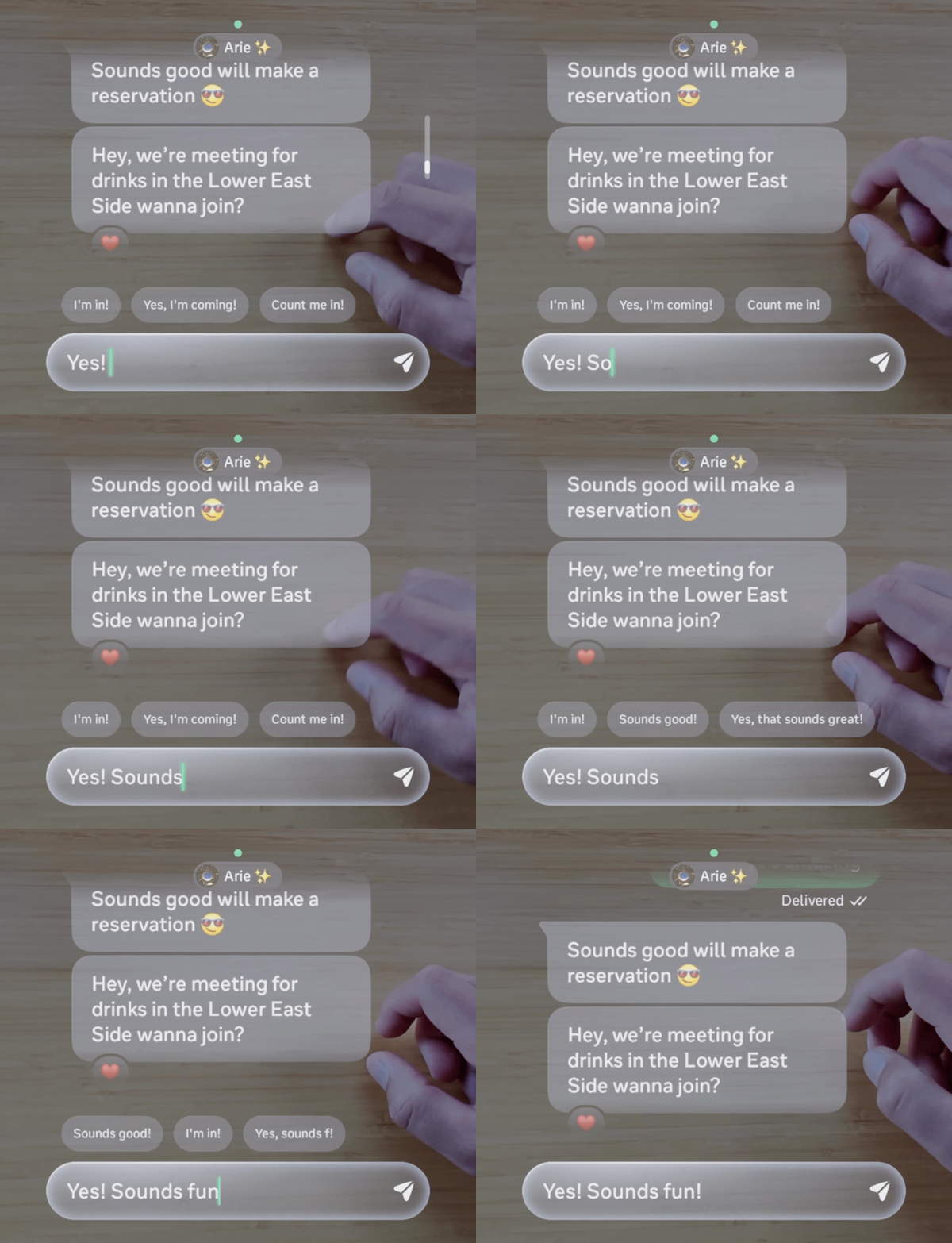


In this context, Ray-Ban Meta Optics Gen 2—and their Oakley counterparts—signal a broader transformation. Eyewear is no longer just about correcting vision; it becomes a gateway to digital interaction. Less screen, more sight.