
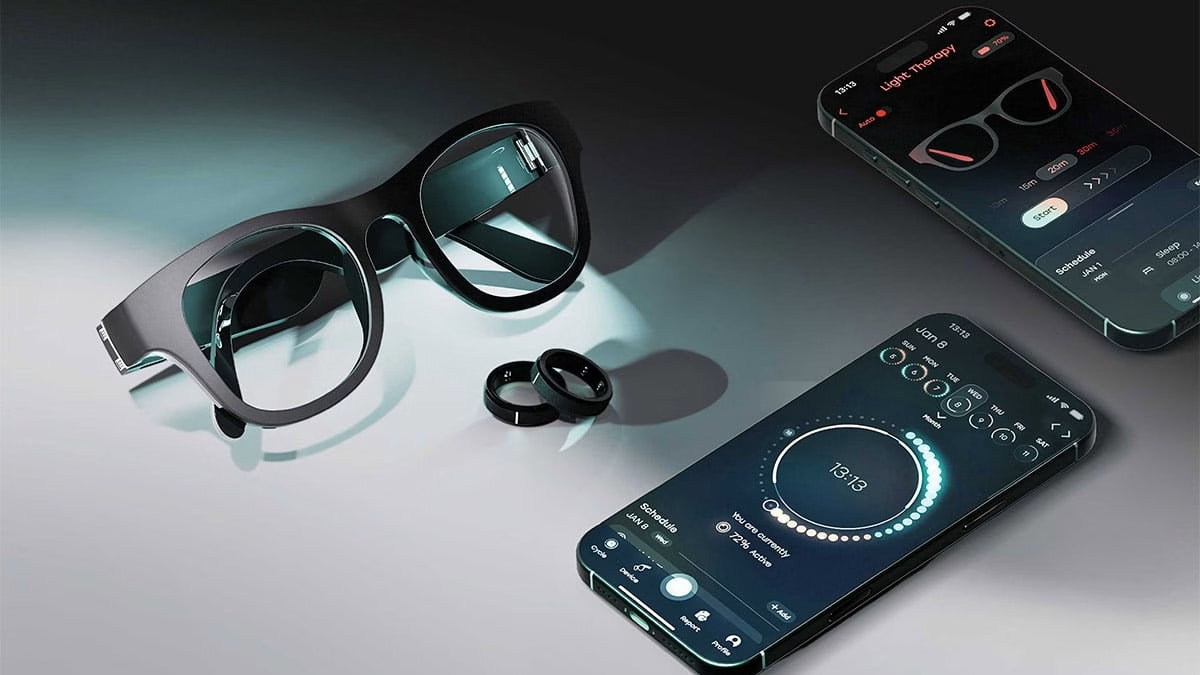
Liora is a wearable light therapy system designed for night shift workers. The complete solution — smart glasses, biometric ring, and mobile app — adapts to unconventional sleep-wake cycles and improves sleep quality through personalized light exposure management.
Liora integrates three core elements: light therapy glasses that emit specific wavelengths, a biometric ring that collects physiological data, and a mobile app that syncs this data with the user’s work and rest schedules. The system then delivers real-time recommendations to optimize light exposure and support circadian alignment.
Liora is based on light therapy principles, using targeted wavelengths to regulate the body’s internal clock. Exposure to blue light helps maintain alertness, while in the evening, the interface shifts automatically to red light to avoid disrupting melatonin production — encouraging quicker sleep onset and deeper rest.
Unlike conventional home-use or clinical light therapy equipment, Liora is designed for portability and daily wear. Both the glasses and ring are discreet and ergonomic, allowing users to continue therapy while commuting, working, or winding down — whenever their schedules demand it.
The biometric ring continuously monitors vital indicators such as heart rate, body temperature, and sleep phases. Combined with the user’s inputted shift schedule, the app delivers a tailored light therapy program, adjusting timing and light type to align with the user’s unique circadian rhythm.
Liora is the brainchild of South Korean designers Byun Jeonghun, Song Hohyun, and Park Jisu. The concept won a Red Dot: Next Gen Award in the Healthcare category for its thoughtful blend of design, portability, and scientific rigor in the field of wearable light therapy.
Because Liora addresses a critical yet often overlooked health challenge: sleep disruption in irregular work schedules. By combining portable design with biometric data and therapeutic light, it represents a new wave of wellness tools tailored to real-world circadian needs.
Further reading :

Online as in a shop window, the image comes before the words: it is what the customer studies, what reassures them or cheapens a frame chosen with care. Yet eyewear is one of the hardest objects to photograph — lens and material bounce light in different ways. This is the practical guide to eyewear photography […]
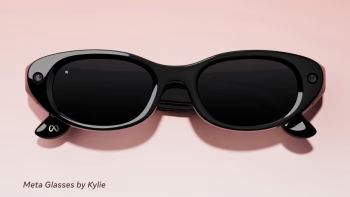
On June 23, 2026, Meta and EssilorLuxottica unveiled Meta Glasses, a new line of smart eyewear. After Ray-Ban Meta and Oakley Meta, it is the first time the wearable carries Meta’s own name — a sign that connected eyewear is establishing itself as a standalone optical category rather than a piece of technology grafted onto […]

Linda Farrow doesn’t do nostalgia. With the Iconic Collection, the British house revisits its founding vocabulary — the forms that defined it in 1970 — and reengineers them for a generation that never saw the originals. This is not a reissue. It is a restatement. A Return to Origins That Refuses to Romanticise Founded in […]