
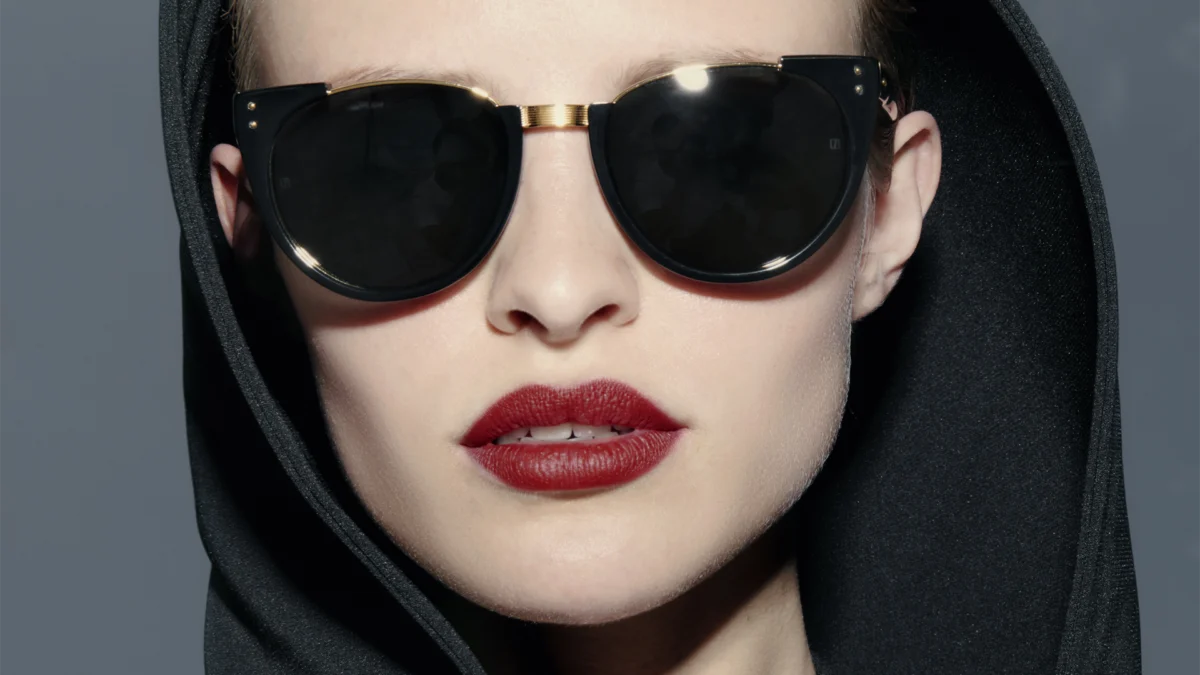
Linda Farrow: the British icon of high-end eyewear

Linda Farrow: the British icon of high-end eyewear

Linda Farrow is a British luxury eyewear brand founded in 1970, known for pioneering avant-garde design and collaborating with global fashion houses. It remains a reference in the high-end eyewear segment.

What is the history and identity of Linda Farrow in the eyewear industry?

Linda Farrow was established in 1970 by its namesake designer and quickly gained recognition for innovative, fashion-forward designs, especially popular in the 1970s and 1980s. After a hiatus, the brand was revived in 2003 by Simon Jablon, Linda Farrow’s son. Since then, it has repositioned itself as a leader in luxury eyewear with a strong fashion influence and designer collaborations.

What materials and design codes define Linda Farrow eyewear?

Linda Farrow eyewear is crafted using premium materials such as Japanese titanium, hand-polished acetate, and 18k gold-plated details. The aesthetic is shaped by bold geometric lines, sculptural silhouettes, and understated luxury, drawing inspiration from vintage glamour and modern minimalism.

What collections and segments make up Linda Farrow’s eyewear offering?

The Linda Farrow range includes optical and sunglasses collections for both men and women. The brand also releases limited-edition models and designer collaborations with names such as Dries Van Noten, The Row, and Raf Simons. These lines reflect a contemporary luxury approach grounded in exclusivity and design sophistication.

How does Linda Farrow design and manufacture its eyewear? Is there any documented sustainability commitment?

The brand’s designs are conceived in London and manufactured in Japan, emphasizing artisanal precision and high-quality craftsmanship. As of now, there is no publicly documented or specific sustainability commitment available from the brand.

Where and how is Linda Farrow eyewear distributed?

Linda Farrow eyewear is sold through flagship stores in London and Mykonos, via its official online store, and through high-end retailers and concept stores worldwide. Its distribution strategy targets luxury-focused markets and exclusive retail environments.

What is Linda Farrow’s market positioning in the eyewear industry?

Linda Farrow is positioned as a leader in the luxury eyewear segment, combining heritage design, fashion collaborations, and Japanese manufacturing excellence.

Further reading :

Paloceras Nouvelle Fiction Sun: The Pebble Series Goes Solar

What Paloceras built with the Pebble series, then translated into prescription eyewear with Nouvelle Fiction optical, now reaches its third chapter: a sunglasses collection that preserves the house’s sculptural grammar while turning it toward the light. Nouvelle Fiction Sun is not a spin-off. It is a continuation — on its own terms. From Optical to […]

Oakley Jackets 2026: When Performance Becomes Aesthetic

Thirty years after their debut, Oakley Jackets are no longer just evolving. They are redefining what sports eyewear can be — and what it represents. In 1994, Oakley introduced a frame that didn’t exist before. Wraparound, bold, engineered not to please but to perform. In 2026, that same mindset expands into a broader vision: a […]

Dolce & Gabbana Devotion SS26 Eyewear: when the heart becomes a signature

Rome, at the end of the day. Light moves across the façades, catches the acetate, then settles on a gold detail: a heart. With Dolce & Gabbana Devotion SS26 eyewear, the Italian house shapes a collection where the gaze becomes a language, and emotion takes the form of a symbol that is instantly recognizable. Here, […]

Valentino Spring Summer 2026 Eyewear: Couture Through the Lens

Valentino Spring Summer 2026 eyewear brings sunglasses to the forefront of the House’s wardrobe. This season, Valentino builds on instantly recognizable codes — the VLogo, archival stripes, and its signature red — and translates them into sharp silhouettes that move between graphic and refined. Strong cat-eye frames, studded ovals, and slim metal designs enhanced with […]

Made in Italy Parisee Eyewear: Italian-Made Sunglasses Built for Everyday Wear

Made in Italy Parisee Eyewear brings together six acetate sunglasses made in Italy, designed with a clear idea in mind: to offer readable shapes, well-held material, and a stable fit for everyday wear. Each model combines Category 3 lenses, controlled volumes, and clean finishes, within a line designed to be worn often and to maintain […]

Saint Laurent HOWL: the new eyewear line unveiled for Summer 2026

Saint Laurent introduces HOWL, a new eyewear line first launched with the Men’s Summer 26 collection and later shown on the Women’s Summer 26 runway and in Women Spring 26. Defined by bold volumes, glossy surfaces and a distinctive plumped effect, the line brings a sculptural attitude to the house’s eyewear vocabulary. What does Saint […]

Eco-Friendly Eyewear Made in France: The World of Shelter

Eco-friendly eyewear made in France reflects a new way of thinking about design, craftsmanship, and durability. In Shelter’s world, eyewear is not reduced to a functional object. It becomes a carefully constructed design piece shaped by responsible materials, French artisanal know-how, and a strong visual identity. The brand was born from the meeting of Florent, […]

Chloé Eyewear Spring–Summer 2026: A Fluid Vision of Femininity

From the very first frames of the Chloé Eyewear Spring–Summer 2026 campaign, a soft, almost liquid light sets the tone. Under the creative direction of Chemena Kamali, the house celebrates a free-spirited, spontaneous, and sun-drenched femininity — the timeless essence of Chloé. Between curved lines and translucent shades, this eyewear collection captures the idea of […]

Smart Glasses 2026: Innovation, Use Cases and Emerging Trends

Smart glasses 2026 mark a decisive step forward in wearable technology. Once considered experimental devices, they are now evolving into tools designed for practical, everyday use: communication, content capture, contextual assistance and real-time interaction. In 2026, the discussion no longer centres solely on technical capability. Design integration, social acceptability and meaningful functionality define the direction of […]