

The Musée de la Lunette, located in Morez, in France, is far more than just a museum: it offers an immersive journey into the history and craftsmanship of French eyewear. Situated in the heart of the “French eyewear capital,” this unique institution passionately traces the story of an industry that shaped its region and influenced generations.
In this exclusive interview with Lauriane Grosset, director of the museum, we uncover the secrets and treasures of this extraordinary establishment.
Despite fierce competition from Asia that devastated the industry in the 1990s, eyewear companies based in the Jura, particularly around Morez and Morbier, still represent one of France’s most important eyewear hubs today.
Given this rich industrial past, and with modernization leading to the destruction of old workshops, the museum project emerged following significant efforts by retired eyewear makers in the 1970s to collect and preserve local industrial heritage. In the 1980s, the idea of creating a “showcase for the Morez eyewear industry” was born under the leadership of the municipality and its mayor, Jean-Paul Salino, himself a former eyewear maker. By 1995, the project for a “center for eyewear life” was officially launched. The architectural and museographic design by Gilles Reichardt and Gilles Ferreux was selected in February 1998, and construction on the “Viséum” building began in September 2000. The Musée de la Lunette was inaugurated on May 17, 2003, with the participation of Alain Lambert, then Minister for the Budget and Budgetary Reform.

Parisee -.How are the museum’s collections built, and do they continue to grow?
To ensure coherence, we have a clear acquisition policy defining the key areas for collection development. For instance, we focus on items related to eyewear from historical, scientific, or technical perspectives.
Parisee -.What are the museum’s most recent acquisitions?
L. Grosset -. About two months ago, we received an extraordinary donation of over 500 sunglasses from an avid collector. This adds to three prior donations from the same person in 2005 (over 400 items), 2013 (more than 200 items), and 2022 (400 sunglasses). His eponymous collection now totals around 1,500 pieces, over half of which feature luxury brands like Cartier, Chanel, Dior, Gucci, and many more, dating from the 1970s to the 2000s.
Parisee -. When did the first glasses appear?
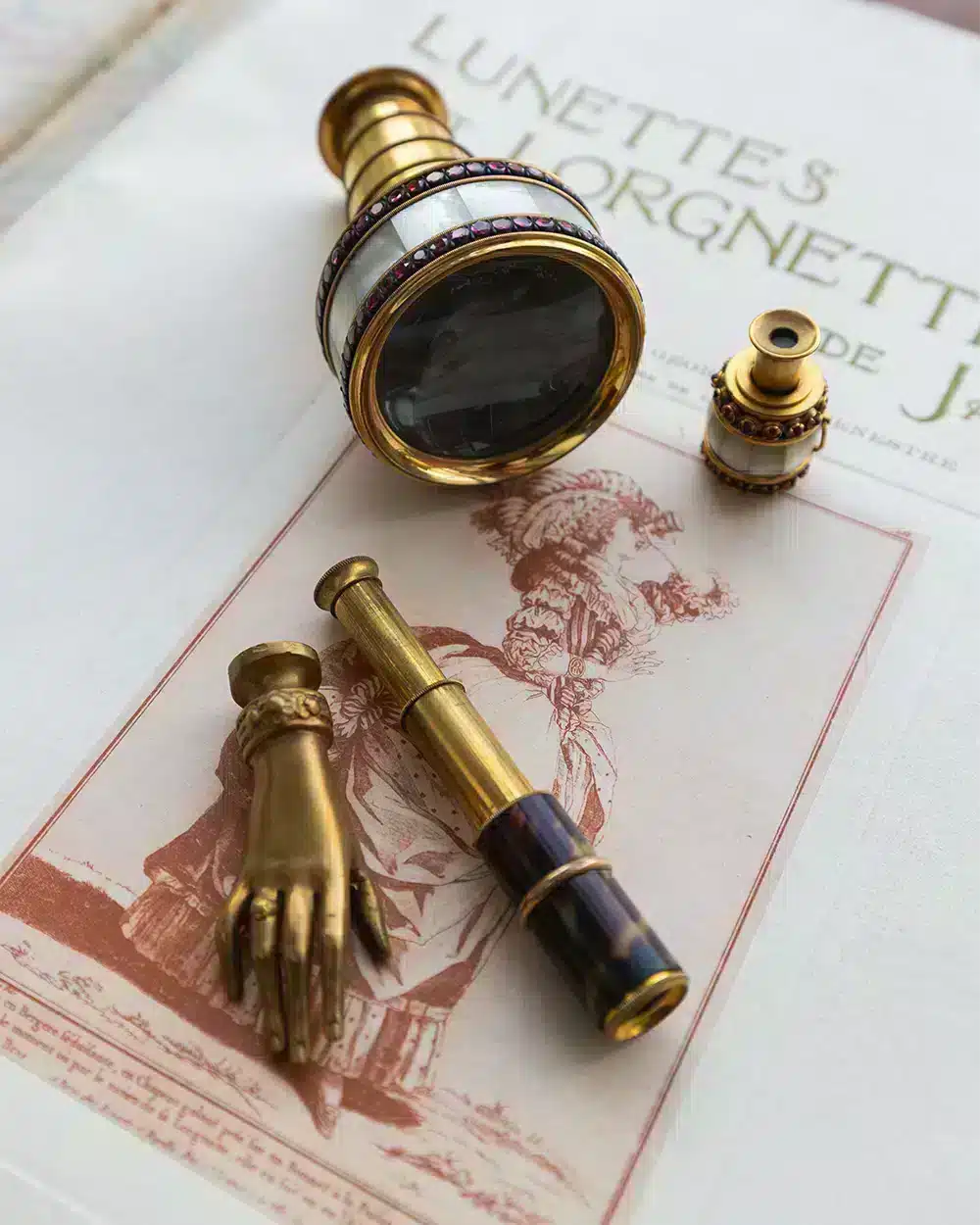
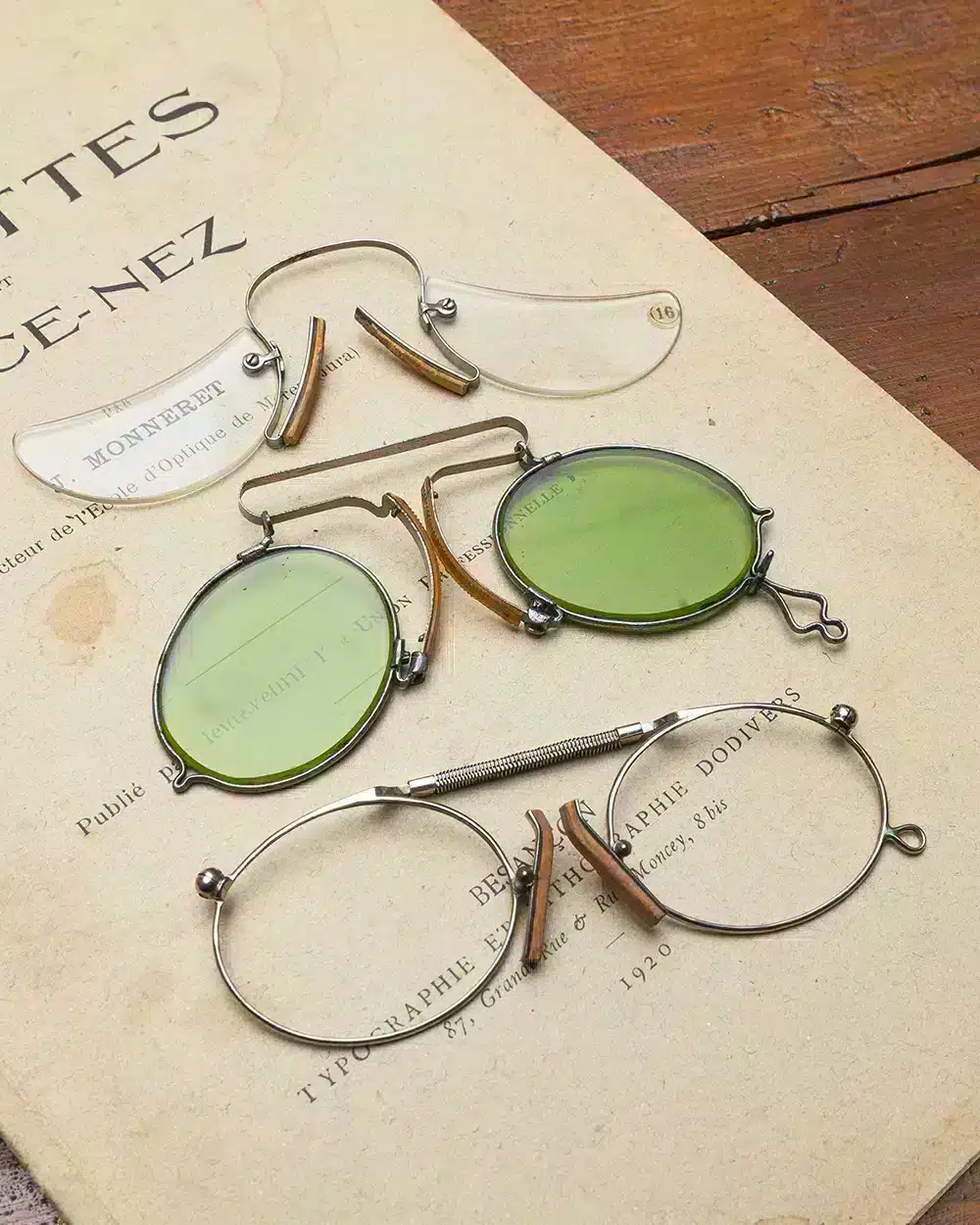
L. Grosset -. Glasses first appeared in Italy at the end of the 13th century, thanks to the glassmaking expertise of Venice and, especially, Murano. Although magnifying lenses had been known since antiquity, it was the invention of “besicles”—two lenses made from beryl (rock crystal) joined by a rivet—that marked the birth of the first glasses. The introduction of side arms, noted in France in the mid-18th century, gave glasses the familiar shape we know today.
This innovation was a revolution in eyewear history, although handheld optical instruments, like lorgnettes and monocles, remained more discreet and fashionable during the Enlightenment.
Parisee -. What are the museum’s oldest models and standout pieces?
L. Grosset -. Among our oldest items are 18th-century besicles made from boiled leather and whalebone. We also exhibit contemporary temple glasses from that era, such as a pair attributed to Louise Victoire, the daughter of Louis XV, adorned with royal symbols.
The museum’s collection is distinguished by its exceptional variety, showcasing materials such as gold, silver, ivory, and tortoiseshell, as well as iconic historical artifacts. One of our “Mona Lisas” is a rare pair of glasses made by Pierre-Hyacinthe Caseaux, the founder of the local eyewear industry.
Additionally, we house the Pierre Marly Collection on loan from EssilorLuxottica, one of the world’s largest eyewear collections. It includes lorgnettes once owned by Sarah Bernhardt and designs by Marly, the “couturier of glasses,” who created pieces for Elton John, Brigitte Bardot, and other 20th-century icons.
Parisee -. When did glasses transition from medical tools to fashion accessories?
L. Grosset -. Starting in the 1950s and 1960s, fashion began to influence utilitarian objects, including eyewear, thanks to the invention of cellulose acetate in the 1930s. This material revolutionized the industry, leading to an explosion of creativity with bold, original, and unusual shapes and colors, such as the butterfly and cat-eye designs.
At the same time, the glamorous frames worn by Hollywood stars helped popularize sunglasses. Parisian optician and designer Pierre Marly brought a wave of innovation and modernity to the industry, creating custom and unique glasses for numerous personalities.
From that point on, the social image of glasses wearers transformed—from being mocked for their perceived disability to becoming charismatic individuals expressing their personality through their eyewear, which even became an identifying feature (e.g., Michel Polnareff’s glasses).
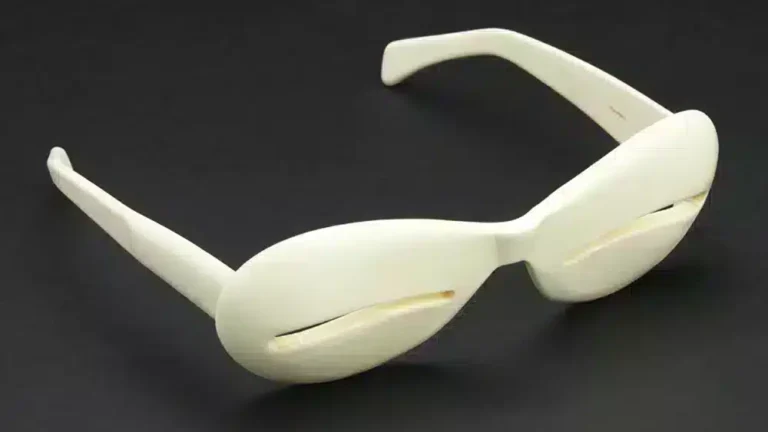
The first designer roles were established in eyewear factories to tailor models to individual tastes and preferences, and the first collections were often created in collaboration with renowned couturiers. André Courrèges was one of the pioneers in using glasses as a fashion accessory. He partnered with Pierre Marly to create iconic models for fashion shows, such as the slit-frame design worn during the Space Age collection (1964), which is now displayed at the museum.
Parisee -. What is the unique role of glasses in the history of fashion?L.
Grosset -. Fashion is synonymous with the pursuit of aesthetics, and glasses are no exception. They have become objects of display, reflecting the importance placed on appearance in our society. Dressing your eyes is as important as dressing yourself. Glasses are no longer hidden; they are worn proudly. They have indeed become an extension of our personality and are sometimes worn even when not necessary.
This is why many optical and sunglasses frames bear the marks of famous couturiers and designers or result from collaborations between eyewear makers and architects, designers, stylists, celebrities, and more. Glasses are undeniably a fashion accessory, adapting to individual tastes and the trends of the moment. And without a doubt, they still have a bright future ahead.
Parisee -. Can certain pairs of glasses be considered works of art?
L. Grosset -. Optical instruments that are handheld, which have enriched the history of glasses since their origins, are undoubtedly works of art due to their superior artistic qualities and rarity on the art market.
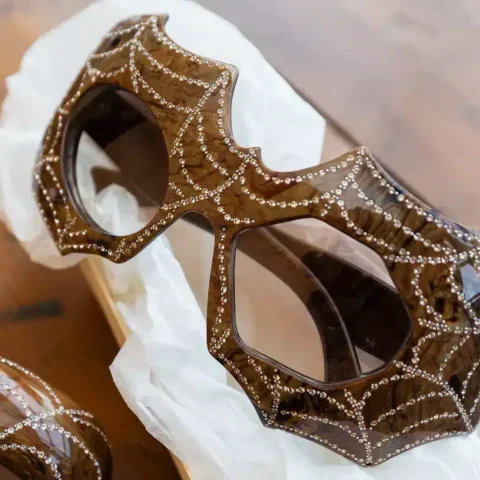
Modern glasses, as we understand them today, can also be considered works of art, even if uniqueness is not their defining trait. Their quality, design, originality, and sometimes rarity on the market make them artistic objects in their own right. For instance, I’m thinking of the butterfly glasses by Pierre Cardin (circa 1960) or, more recently, the glasses created by MOF André Chaudier (1970–2000), which are preserved at the Musée de la Lunette.
The Musée de la Lunette in Morez is a living testament to the history and innovation of French eyewear craftsmanship. Blending artisanal tradition with modernity, it offers a unique journey through centuries of creativity and passion. If you find yourself in the Jura region, don’t miss this enriching visit that highlights a fascinating part of our heritage. Ready to discover this cultural gem?
Address:
Musée de la Lunette
Place Jean Jaurès, 39400 Morez, France
Phone: +33 3 84 33 39 30
Opening Hours:
Further reading :

Eco-friendly eyewear made in France reflects a new way of thinking about design, craftsmanship, and durability. In Shelter’s world, eyewear is not reduced to a functional object. It becomes a carefully constructed design piece shaped by responsible materials, French artisanal know-how, and a strong visual identity. The brand was born from the meeting of Florent, […]

From the very first frames of the Chloé Eyewear Spring–Summer 2026 campaign, a soft, almost liquid light sets the tone. Under the creative direction of Chemena Kamali, the house celebrates a free-spirited, spontaneous, and sun-drenched femininity — the timeless essence of Chloé. Between curved lines and translucent shades, this eyewear collection captures the idea of […]

Smart glasses 2026 mark a decisive step forward in wearable technology. Once considered experimental devices, they are now evolving into tools designed for practical, everyday use: communication, content capture, contextual assistance and real-time interaction. In 2026, the discussion no longer centres solely on technical capability. Design integration, social acceptability and meaningful functionality define the direction of […]

The Gucci Spring Summer 2026 collection shines a light on individuality and diversity. Staying true to its heritage, the Italian Maison unveils a Gucci Eyewear campaign created under the brand’s artistic direction in collaboration with Kering Eyewear.This season fuses retro elegance, modern attitude, and artisanal craftsmanship, portraying the gaze as the ultimate expression of self. […]

The Andy Wolf glasses 2026 collection captures a new vision of fashion — one where style meets emotion, and design becomes a way of seeing. This season, the Austrian eyewear house transforms each frame into a statement of identity. Between sculptural silhouettes, translucent colors, and organic energy, Andy Wolf defines the aesthetic codes of 2026: […]

With Soft Power, FACE A FACE enters a new phase of its creative language. Presented on 5 February 2026, the collection marks the evolution of Face à Face 3.0: a femininity that asserts itself, breaks free and refuses compromise. Here, softness is never submissive. It becomes strength — a controlled tension between line, volume and […]

In 2026, men’s sunglasses move toward a clearer, more controlled aesthetic. Lines become more precise, volumes more structured, and colors favor depth over immediate impact. The frame acts as a balancing element: it defines an overall look without overpowering it. This shift reflects a stronger search for coherence. Sunglasses are designed to accompany the men’s […]

Women’s sunglasses 2026 move toward a more refined vision of style. Lines are cleaner, proportions are better balanced, and colors feel more nuanced. The accessory asserts itself without overpowering the silhouette. It frames the face, structures an outfit, and enhances personal style with restraint. This year favors thoughtful choices: frames designed to last, adaptable to […]

Nouvelle Fiction Paloceras marks a pivotal moment for the independent eyewear house, as its distinctive sculptural vocabulary moves decisively into the realm of optical wear. Known for inflated silhouettes and expressive volumes, Paloceras has built international visibility through frames worn by figures across music, film, and design, and featured in leading fashion and culture publications. […]
Receive exclusive updates on the latest in the world of eyewear, our favorite selections, and unique offers reserved just for our subscribers. Join the Parisée community and elevate your style today!
Photo : Lumiprod